傲慢与偏见
书名:正能量|作者:笑无语|本书类别:古言|更新时间:06:03:41|字数:3896字
A |
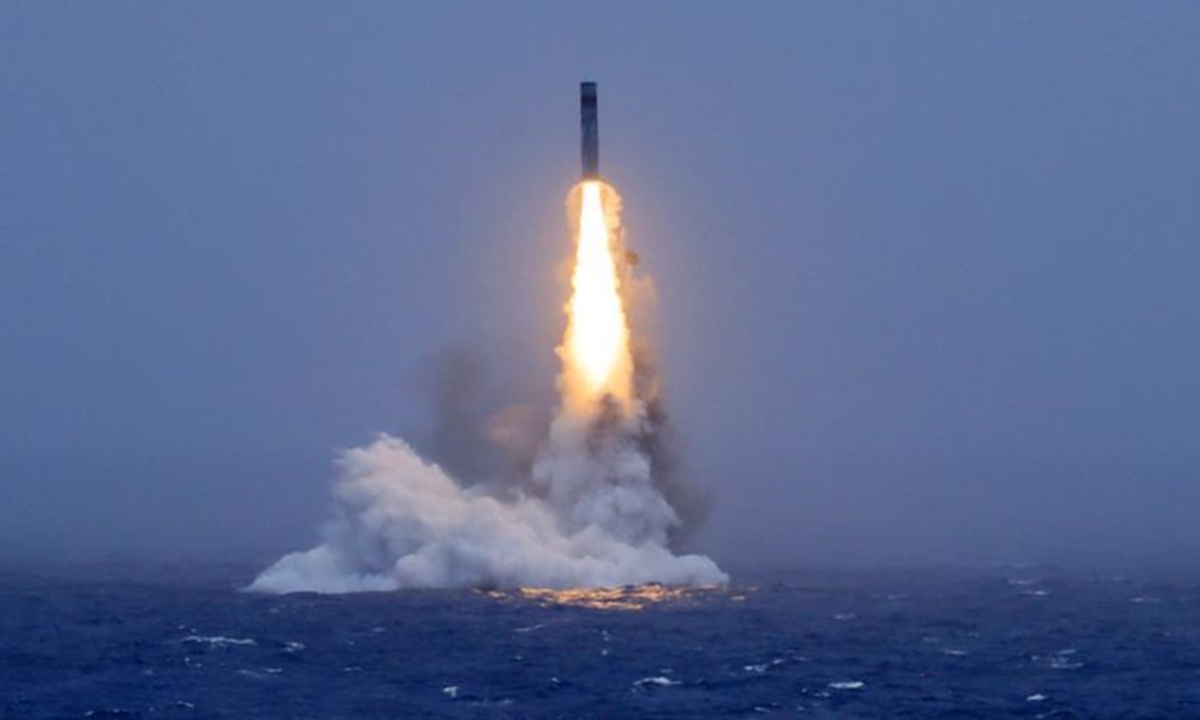
China on Wednesday slammed a US-led joint statement regarding China's notification of a ballistic missile launch, calling the move as being driven solely by political motives and exposing the hypocrisy and double standards of the US and certain countries.
"The so-called joint statement by the US and relevant countries at the Conference on Disarmament, which brandished the Hague Code of Conduct Against Ballistic Missile Proliferation and alluded to China's missile test launch, was driven solely by political motives and fully reveals their hypocrisy and double standards," Chinese Foreign Ministry Spokesperson Guo Jiakun said on Wednesday.
China urges relevant countries to stop abusing multilateral arms control mechanisms, replace irrational confrontation with sincere dialogue and create conditions necessary for enhancing dialogue and exchanges in the area of arms control, Guo said.
The comments came after China's Ambassador for Disarmament Affairs Li Chijiang firmly rejected the US-led joint statement at a UN meeting in Geneva on Tuesday local time, stressing that China's legitimate defense modernization should not be called into question, and its goodwill in providing advance notification of missile launch should not be hijacked by geopolitical calculations.
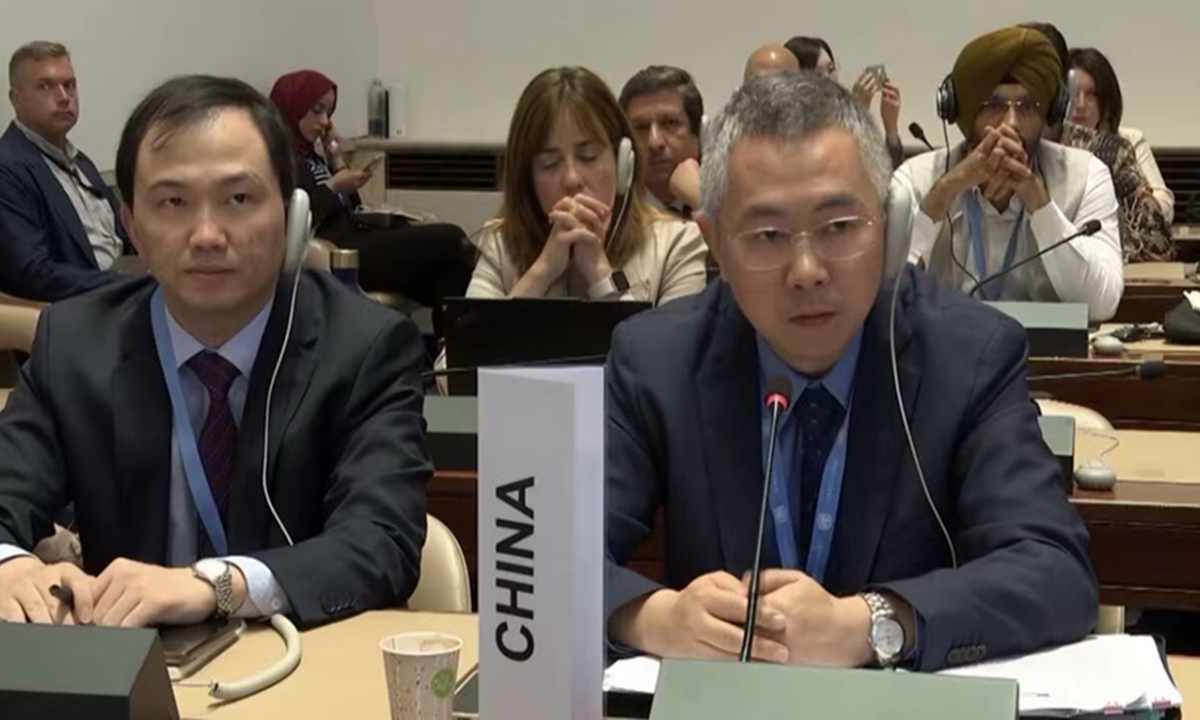
At a plenary meeting of the Conference on Disarmament in Geneva on Tuesday, the US and other 40 countries issued a joint statement on what they called "notifications of ballistic missile launches," criticizing China's submarine-launched intercontinental ballistic missile test conducted in July.
In response, Li Chijiang called the move political manipulation and blatant double standards and said China firmly opposes the abuse of the Conference on Disarmament for political maneuvering.
Driven by its own political interests, the US had rallied a number of countries, including some that are not members of the conference, to join the statement and had nitpicked and leveled baseless accusations against China's goodwill gesture of providing advance notification of the missile test, he said.
He noted that the US criticism was groundless, saying Washington had cited the voluntary political commitment of the Hague Code of Conduct Against Ballistic Missile Proliferation (HCOC) to demand that China provide advance notifications of missile launches. However, China is not a member of the HCOC and is therefore not bound by its provisions.
The Chinese People's Liberation Army Navy announced on July 6 that one strategic nuclear submarine of the navy successfully launched a strategic missile carrying a dummy warhead toward relevant high seas of the Pacific Ocean at 12:01 pm, which landed precisely within the designated waters.
China notified relevant countries in advance of the test launch of a nuclear submarine-based strategic missile, demonstrating the openness and transparency of the Chinese armed forces, said Chen Xi, a spokesperson for the Ministry of National Defense, at a press conference in July.
The US led statement at the Geneva disarmament conference seeks to inject geopolitical rivalry into a multilateral arms control platform. Rather than advancing genuine disarmament, Washington is seeking to stigmatize China as a security threat, constrain its legitimate defense related development and strategic deterrence capabilities, rally an anti China bloc and reinforce US led hegemony, Zhang Junshe, a Chinese military affairs expert, told the Global Times.
The US had repeatedly hyped China's July test launch. Previously on July 8, an official from the US Department of State criticized China's missile test launch, claiming that China notified the US too late and didn't give sufficient detail.
In response, Chinese Foreign Ministry spokesperson Mao Ning said at a press conference that China has stressed more than once that the test launch complies with international law and customary international practice and is not directed at any specific country or target. The Chinese side has released relevant information in a timely manner and notified the US and other countries beforehand.
Distracting attention
The US-led group doesn't represent the international community. Its accusations over China's missile tests lack both reason and legitimacy, reflecting prejudice, hegemonic thinking and an attempt to constrain China's development, said a Beijing-based scholar of China-US relations.
By rallying the other 40 countries to pressure China, the US has once again exposed its familiar playbook of double standards, bloc-building and confrontation. More broadly, Washington's China policy increasingly reflects strategic anxiety and a lack of confidence - not only in governance, the economy, and technology, but also in the military domain, said the expert.
According to the list of 40 other countries published by the US State Department, the signatories include US allies in Europe and Asia. The statement also called on all countries, particularly nuclear-weapon states that launch intercontinental ballistic missiles (ICBMs), submarine-launched ballistic missiles (SLBMs), and space launch vehicles (SLVs), to provide notification at least 24 hours in advance. "Such notifications should include information such as the general class of the ballistic missile or SLV, the planned launch notification window, the launch area and the intended direction of flight."
Zhang Jiadong, professor at the Center for American Studies, Fudan University, said by demanding at least 24 hours' advance notice and detailed launch information, the US wants to gain greater visibility into China's strategic nuclear capabilities by securing earlier and more specific data on missile tests.
By hyping transparency and notification requirements, Washington is seeking to pressure China into revealing more about its military capabilities, reflecting growing anxiety over China's capability, even as questions remain over Washington's own transparency regarding missile tests and nuclear deterrence, said Zhang Jiadong.
Military affairs expert Zhang Junshe also noted that the US has intensified its criticism of China to deflect attention from its own expansion of extended deterrence, nuclear-sharing arrangements and missile-defense programs. These moves heighten the risk of nuclear confrontation, while Washington appears to believe that accusing other countries of lacking transparency can help justify its own military buildup and destabilizing policies.
Moreover, the US possesses one of the world's largest nuclear arsenals and conducts frequent ICBM tests. Against that backdrop, it is absurd for Washington to criticize China, which keeps nuclear capabilities at the minimum level required for national security, said Zhang.
For example, in a single test event last year, the US Navy conducted four scheduled test launches of unarmed Trident II D5LE submarine-launched ballistic missiles from an Ohio-class ballistic missile submarine off Florida between September 17 and 21, 2025. The launches brought the Trident II D5 strategic weapon system to 197 successful flight tests, according to the US Navy.
At the UN meeting in Geneva on Tuesday, China's Ambassador for Disarmament Affairs Li Chijiang also noted that the US was in no position to criticize China over missile testing. China has conducted only three intercontinental ballistic missile tests to date, the fewest among the five nuclear-weapon states, while the US has carried out more such tests, and more frequently, than any other country, he said.
The US has itself failed to properly fulfill responsibilities regarding missile-test notifications and therefore has no grounds to criticize China's voluntary advance notification, Li added.
Li stressed that China remains committed to peaceful development and follows a self-defensive nuclear strategy. China keeps its nuclear forces at the minimum level required for national security and does not participate in any form of nuclear arms race, he said.
China's nuclear forces are an indispensable part of efforts to deter nuclear war, safeguard world peace and security, and maintain global strategic stability. "How can the US, a prolific missile tester and relentless arms expander, fault China for voluntarily giving advance notice? That is hegemonic double standards - and a blatant affront to international fairness and justice," said Zhang Junshe.
。 전남광주, 지난해 980건·250억…인쇄물·小물품 반복계약동일업체 연 7회·3억 제한 추진…市 "집중 막고 효율성↑" 왼쪽부터 전남광주통합특별시 무안 남악청사, 광주 상무청사, 전남 동부청사. (사진=뉴시스DB) *재판매 및 DB 금지[전남광주=뉴시스]송창헌 기자 = 전남광주통합특별시가 체결한 전체 계약 10건 중 3건이 1인 수의계약으로, 이 중 상당수는 특정업체 몰아주기식 계약이어서 손질이 필요하다는 지적이다. 특별시는 신속성과 효율성을 위한 수의계약의 순기능은 살리되, 일부 특정업체에 계약이 반복적으로 몰리는 이른바 '단골 계약'을 차단하기 위한 대책 마련에 나섰다.26일 전남광주통합특별시에 따르면 통합 전 옛 광주시와 전남도의 지난해 전체 계약건수와 금액은 3000여 건에 5000억원 규모다. 이 가운데 1인 수의계약은 980여 건, 액수로는 250억원으로, 건수 기준 30%, 금액 기준으로 5% 안팎을 차지했다.그러나 이 중 상당수가 일부 업체에 계약이 반복·집중되는 단골 계약이어서 논란의 대성이 되고 있다.실제 확인 결과 업무보고서와 각종 유인물 등 인쇄물이나 소규모 물품 구매 과정에서 한 업체와 연간 8∼10차례 계약한 사례도 드러났다. 광역시 본청보다는 업체풀이 상대적으로 좁은 일선 시·군·구에서 반복계약 사례가 많은 것으로 파악됐다.감사 부서도 공개 경쟁을 피하기 위한 사업 쪼개기와 특정 업체 몰아주기, 업체에 유리한 규격·평가기준 설정 등을 공공계약 분야의 대표적 취약요인으로 꼽고 있다.계약 후 하자 물품이나 부실 공사를 합격 처리하는 등 이행·검수 단계의 허점도 도마에 오르고 있다. 특히 이와 맞물려 업체 선정에 사적 이해관계가 교묘하게 개입하면 사후 감사만으로 특혜 여부를 가려내는 데 한계가 있다는 지적도 나온다.현재 통합시는 발주계획 사전공개→ 업체 자격·수의계약 횟수 확인→ 수의계약 사유서와 적정성 심사 등 3단계 검증 절차를 밟고 있지만, 다단계 안전 장치에도 반복 계약은 끊이질 않아 '형식적 검증 아니냐'는 비판의 목소리도 높다. 담당자의 자의적 선택도 주요 요인 중 하나로 지목되고 있다.이에 통합시는 통합시는 기존 광주시의 '동일업체 연 10회 제한'보다 강화된 '연 7회·3억원 한도'를 적용하고 광주 뿐만 아니라 무안·동부청사까지 확대할 방침이다.계약 전 업체와 공직자·선출직 등의 이해 관계와 누적 계약횟수를 이중 검증하고, 이해관계 업체 조사도 연 2회에서 4회로 늘릴 계획이다. 계약정보 전면 공개와 정기 모니터링도 병행키로 했다.다만 횟수와 금액만 기계적으로 제한할 경우 긴급계약이나 전문성이 필요한 사업까지 비효율이 발생할 수 있는 만큼 예외 계약은 통합 계약심사위 등 제3의 심사를 거치도록 하는 방안도 함께 검토되고 있다. 특별시 관계자는 "수의계약 운영 실태를 지속적으로 점검하고 제도적 사각지대를 보완해 나갈 계획"이라며 "시·군·구 계약 담당자 간 우수 사례도 공유해 통합시 전체의 공정계약 수준을 높이겠다"고 밝혔다.한편 민형배 시장은 이날 확대간부회의에서 "A·B·C 업체가 있고, 같은 효율을 낼 수 있는데 A에게만 집중된다면 골고루 주는 게 맞다"면서도 "B와 C가 A보다 효율이 떨어진다면 어떻게 할 것인지도 따져봐야 한다"고 말했다. 그러면서 수의계약 횟수 제한을 포함한 별도 개선안을 마련해 보고토록 관련 부서에 주문했다.。


